
About The Sága Project
We all know the meaning of the word "saga" in modern life and everyday language: a tale or story. But far fewer would know the origin of the word.
In fact, Sága was the classical Norse goddess of history and storytelling. So she's a natural and perfect patroness for a project focused on exactly that - women's storytelling as women's ability to impact history.
Share Your Own StoryMeet the Founder
Dr. Kerry McElroy
• The Sága Project
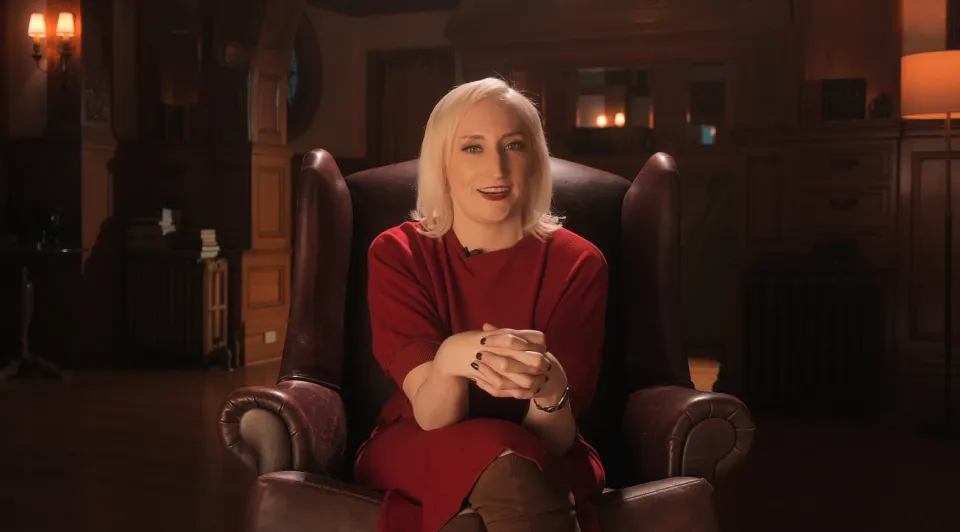
Dr. Kerry McElroy is an investigative journalist, cultural historian, and author. As a writer publishing in The Independent, Narrative Paths, Irish America and elsewhere, she has focused on histories of women in culture, art and protest, sexual abuse and misogyny, and “the metooing of history”: correcting the historical record about systems abusive to women, and inserting women's voices (from both before and after they're gone) into history through testimony and interview.
As an international investigative journalist with The Kyiv Post, McElroy turned her attention and output to articles, segments, and interviews on Russia’s genocidal invasion and occupation of Ukraine.
Her work has taken special focus on the Russian military's use of rape as a weapon of war, Russian war crimes, Russian embassy crimes, and Russia's international disinformation and propaganda campaigns.
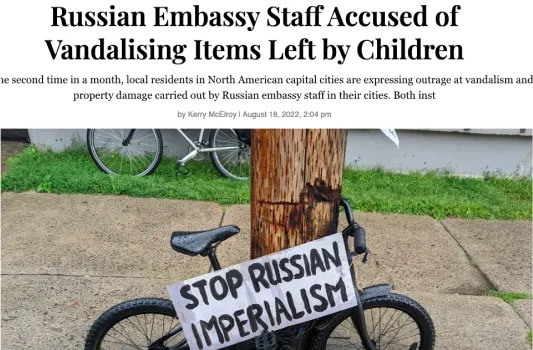
For her exposes of Russian embassy crimes and organized crime and business ties since 2022, McElroy has made it to the Kremlin's lifetime ban and sanction list, with articles triggering discussion of international incidents and being raised in parliaments.

McElroy moved into on-camera and podcast journalism and segments on Ukraine, Russia, propaganda, and global issues in 2023. Her current research and interviews on Russian rape as a weapon of war in parallel between previous wars and the present is currently in development as a documentary film entitled Grandfathers and Grandsons.
McElroy is the author of over sixty-five journalistic and scholarly pieces, and now, dozens of video and audio segments on politics and gender in interview and mini-doc segment format. She continues to publish articles and chapters internationally on women, politics, international affairs, history, arts, culture, and trauma.

She holds masters’ degrees from Columbia and Carnegie Mellon Universities in the US, and a doctorate in humanities from Concordia University, Montréal. Largely based in Canada, she also lives internationally with stints in the US, Europe, the Caribbean, and South America.
But my own inspiration and origin story for this project are a bit unique and interconnected here, too.
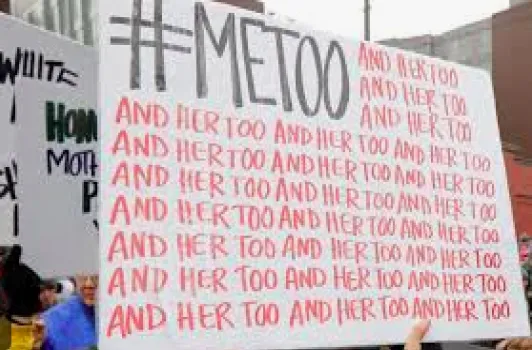
In my career, I've been both an academic cultural historian of women and an international journalist. In this work, I've frequently focused on what I've called "the metooing of history": correcting the historical record about systems abusive to women, and inserting women's voices (from both before and after they're gone) into history through testimony and interview.
Particularly first focusing on classical Hollywood as a factory of sanctioned sexual abuse, I then moved into other fields of society - industries, wars, the past and the present - where women's abuse has been normal and silenced. Where the victors wrote the history - and often got away with it, lauded and respected.
Then in February 2022, I lived through the convoy occupation of Ottawa, Canada, and the unprecedented three-week siege of a North American capital city's downtown core.
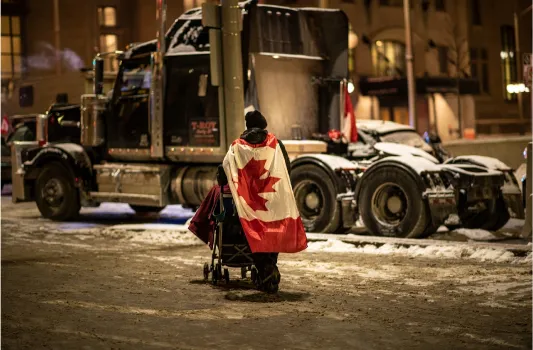
As a journalist, I could clearly see it for what it was: a violent right-wing and Russian-fuelled disinformation op and coup attempt. A slow-rolling Canadian attempt at a January 6th being driven by homegrown hate groups and international money working together.
As a woman, I saw and heard firsthand and through networks alike: hate crimes, rape threats, and public assaults all over the city's streets and spaces.
And yet the right-wing international blogosphere and noise machine, from Twitter to Tucker Carlson and the Russian dictatorship's state media RT, were absolutely, howlingly enraged when the women of Ottawa told the truth online about the crimes taking place all over our city.

Right-wing men from around the world, who had never set foot in Canada, were adamant that we were lying. They were desperately trying to control the narrative and write a counter-history in real time: of peaceful protestors and a tyrannical government. And the truth about the violence, crimes, and danger from the city's women was getting in the way. Misogynistic hate speech and furious accusations were rampant amongst the online trolls.
While virtually locked in my house for three weeks, that pushback for the historical record, on social media and in my journalism and writing, became my job. And the job of many other local women, girls, and community members, too.
I was experiencing in a real-time, unexpected historical event, as a living eyewitness, something I had worked on for years academically and journalistically:
Live truth-telling is historical justice. It's the barring of the bad actors from writing the narrative for the future.
Three days after the convoy was broken and many of its kingpin conspirators arrested, Russia invaded Ukraine.
Since then, I've largely been an international investigative journalist of this genocidal invasion and war, with special focus on the Russian military's use of rape as a weapon of war, Russian war crimes, Russian embassy crimes, and Russia's international disinformation and propaganda campaigns. (I also continue my journalistic and scholarly work on cultural histories of women, misogyny, sexual abuse, and trauma around the world.)
For these efforts, I've made it to the Kremlin's lifetime ban and sanction list, with my articles triggering discussion of international incidents and being raised in parliaments. I've joined the club of investigative journalists who make enemies and draw fire, having now personally been through surveillance, hacking, sabotage, threatened trumped-up lawsuits, attempted career derailment, and deplatforming.
In my metooing of history academic and journalism work, my moral imperative and ethos has always been to tell the stories of women who were denied justice in life, to bring that truth-telling to the historical record. To tell the truth for those who could no longer speak.
Now, we don't have to wait. We speak for ourselves. We tell our stories live, so history is recorded truthfully later.
Indeed we live in a unique moment in human history, where every person can become a citizen-journalist, a citizen-historian, a citizen truth-teller, just by holding their smartphone or making a video or audio clip of their experience.
The Sága Project aims to be a repository of women's stories - print journalism and testimonies, audio and video witnessing, and on-camera journalism and interview segments.
Journalism is history, history is journalism, and oral history and interviews are vehicles for truth, justice, and reclaimed power.
Join us - Share your own saga
We invite you to pitch your project, collaboration, or share a completed piece of citizen-witness video journalism via the following form.