
On the Right Foot
by Louise Morgan & Alyssa Tremblay. Published: 05 . 05 . 2014 - Concordia University
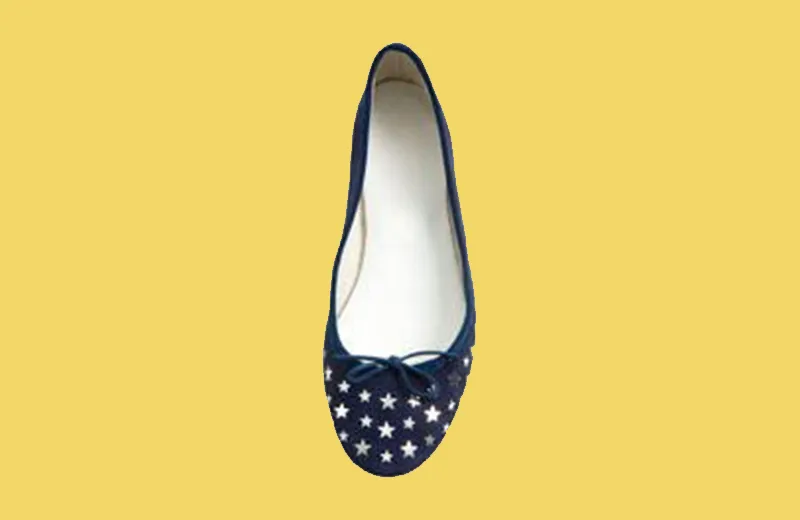
From fashion and feminism to business, health and more, shoes offer Concordians a closet-full of subjects to research.
“Fashion — including footwear — can be a tool of liberation and oppression. It provides one of the strongest visual statements of identity within culture,” says Kerry McElroy, women’s studies scholar and PhD candidate at Concordia’s Centre for Interdisciplinary Studies in Society and Culture.
“Unfortunately women are getting many mixed messages and there’s a lot of confusion about what’s sexy, empowering, liberating,” she says. “If a woman feels empowered or that her identity is enhanced wearing stilettos or Birkenstocks, that’s her choice.”
Accepting a woman’s decision is a reflection of today’s third-wave feminist view — to embrace diversity and reject any criticism of how a woman expresses herself. The trouble is, according to McElroy, if critique is considered wrong, we lose constructive dialogue.
This inclusive view of feminism took hold in the 1990s as a reaction to the bra-burning, second-wave of the 1960s, when high heels and traditional patriarchal feminine ideals were rejected.
Yet even today, McElroy says, “I have friends working in the corporate world who would stand out wearing flat shoes. It’s part of their corporate wardrobe to wear four-inch heels and a pencil skirt. You can’t be too frumpy or you won’t get ahead.”
McElroy believes the ideology at times went too far in the 1970s, in instances where it mandated throwing out all of the accoutrements of femininity in favour of androgyny. “At same time, if we’re in an environment where enforced femininity in the form of high heels, tight clothing and makeup is culturally mandated, then a lot of the work that was done has been pushed backwards.”
This swing of the pendulum — continuously rebelling against society’s latest feminist slant — results in lukewarm, quasi-feminism, McElroy says.
She points to a popular 1990s trend: “Women were rejecting second-wave feminism by wearing girly, baby doll dresses, but they were also rejecting mainstream femininity by wearing them with combat boots. Then, by the early 2000s, Britney Spears had come in and the whole circle was reset to the old free sexuality being sold as empowering.”
McElroy points out the challenge brought on by that thinking. “You get into this muddle where anything a woman does is empowering and feminism is whatever you want it to be. I think that’s a mistake,” she says.
Some younger women who aren’t exposed to feminist discussion might have the mistaken impression that walking around in eight-inch, clear heels is empowering, she says. “Not so much, if you can barely walk.”
McElroy issues a caution: “Whatever a woman chooses to wear, she should be aware of when she’s being marketed to and manipulated. Fashion is still fuelled by a corporate, capitalist society that sells women an idea of beauty.”
Back to Interviews